Ready to unlock your machinery’s full potential? At Crown Power & Equipment, we’re all about helping you get the most out of your equipment. As your local Missouri Kubota dealer, we know your success depends on the right tools for every task.
Boosting your tractor’s performance starts with choosing durable, high-quality parts. Whether you’re clearing land or managing a farm, the right attachments make your machine more versatile. We’re here to help you find the essential upgrades for easier, more efficient work.
Every hay season, Missouri producers face the same question: round bales or square bales? The answer isn’t universal — it depends on your herd size, storage setup, labor availability, and how you plan to move and feed your hay. Here’s a practical breakdown to help you decide which baler makes the most sense for your operation.
How Round Balers Work and Where They Shine
Round balers compress hay into large cylindrical bales, typically ranging from 4 to 6 feet in diameter depending on the machine and settings. They’ve become the go-to choice for cattle and livestock operations across Central and Southern Missouri, largely because of how efficiently they handle large volumes of hay with minimal labor.
A single operator can bale and later move and feed round bales with the right combination of tractor, spear attachment, and bale mover, without needing extra hands on the ground. Round bales also shed water reasonably well when stored outdoors, since their shape allows rain to run off rather than pool, though wrapping or net-wrapping still matters for reducing spoilage. For producers running larger herds or covering more acreage, round balers generally offer better throughput per hour in the field.
Considerations for Round Bale Storage and Feeding
Round bales require equipment to move — typically a tractor with a spear or grapple attachment. If you’re feeding cattle in the field, a bale unroller or hay ring can reduce waste significantly. Storage matters too: round bales stored outside and uncovered will see more spoilage on the exterior layer than those stored under a roof or wrapped in plastic.
 How Square Balers Work and Where They Shine
 How Square Balers Work and Where They Shine
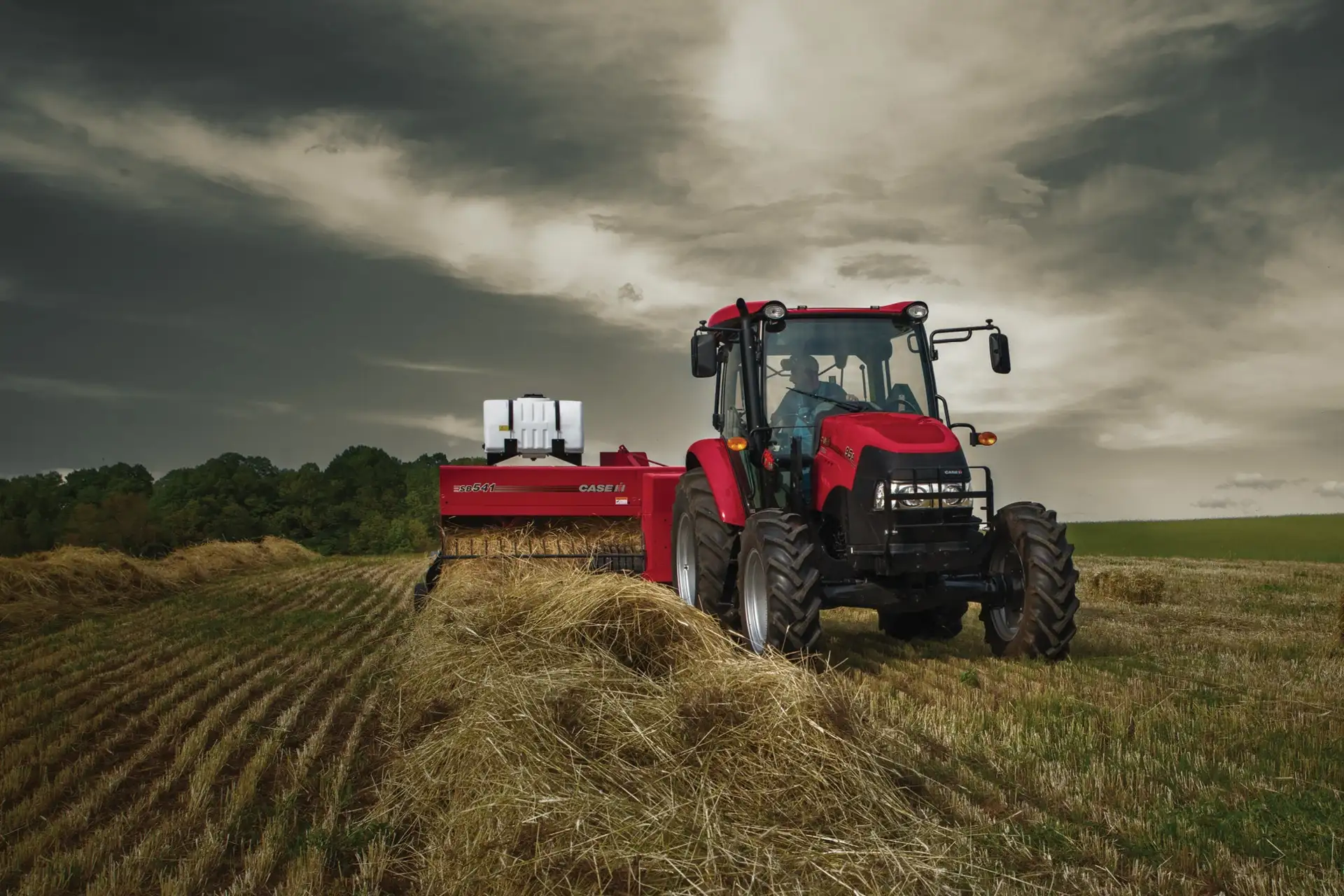
Square balers (including small square and large square/rectangular formats) produce bales that stack neatly, store efficiently, and are easier to transport by hand or with basic equipment. Small square bales remain the standard choice for horse owners, small livestock operations, and anyone selling hay directly to individual buyers, since most buyers in that market expect and prefer square bales.
Large square balers split the difference, offering the stackability and transport efficiency of square bales with a bale size closer to what round balers produce, making them popular with operations that sell hay commercially or need to maximize storage density in a barn or shed.
Labor and Market Considerations
Small square bales require more manual handling, whether that’s your own labor or a hired crew during baling season. That labor cost is a real factor worth weighing against the higher retail price square bales often command, particularly in the horse hay market where buyers are willing to pay a premium for well-cured, easy-to-handle square bales.
Matching Your Baler to Your Operation
The right choice ultimately comes down to a few key questions. How many acres are you baling, and how much labor do you have available at baling time? Are you feeding your own livestock, or selling hay to other buyers? What’s your storage situation — do you have covered storage, or will bales sit outside through the winter?
Cattle producers running larger herds across more acreage typically find round balers deliver better efficiency and lower labor costs per ton of hay produced. Horse hay producers and smaller operations selling directly to individual buyers often stick with small square balers because that’s what the market expects and pays for. Mid-size and commercial hay operations increasingly look at large square balers as a way to get stackability and market appeal without sacrificing too much efficiency.
Don’t Overlook Compatibility With Your Existing Equipment
Whichever baler style you choose, it needs to pair well with the tractor horsepower and PTO capacity you already have, or plan to invest in. Undersized tractors struggle to run larger balers efficiently, leading to more wear, more fuel consumption, and slower fieldwork. It’s worth discussing your full equipment lineup, tractor, baler, mower/conditioner, and rake, as a system rather than evaluating each piece in isolation.
Crown Power & Equipment works with Central and Southern Missouri producers to match hay equipment to the realities of their specific operation, not just a generic recommendation. That conversation upfront can save significant time and money over a full season of baling.
Attachments and Accessories Worth Considering
Regardless of which baler style you choose, the right accessories can make a meaningful difference in efficiency and hay quality. Net wrap and twine options affect both bale integrity and storage longevity, with net wrap generally offering better weather resistance for round bales stored outdoors. Moisture testers help producers avoid baling hay that’s too wet, a common cause of mold, heat damage, and even fire risk in stored bales.
For operations running larger acreage, investing in a bale accumulator or grouper for square bales, or a bale processor for round bales, can significantly reduce the labor required to move and feed hay throughout the season. These accessories are worth factoring into your overall equipment budget alongside the baler itself.
Reach Out to Crown Power For Balers and More
Both round and square balers have a solid place in Missouri hay operations — the right one depends on your herd, your labor, your storage, and your market. Taking the time to match your baler to your actual operation, rather than defaulting to whatever’s most common in your area, will pay off across every hay season to come.
If you’re weighing your options for this season or planning for next year, the team at Crown Power & Equipment can help you compare models and find the right fit for your farm. Visit crown-power.com to explore inventory or schedule a conversation with our equipment specialists.